Karlheinz Muhr Library

The Complete “Austrian School of Economics” Collection


© 2026 Karlheinz Muhr Library·Conceptualized, designed & built bykrin.ai↗
Karlheinz Muhr Library
ArchiveTimelineLibrarian
Sign in

The Austrian School, 1871 – today

A tradition in twelve books.

The turning points of a 150-year argument, told in the collection's own editions. Every quotation cited to its passage.

Contents
ViennaBetween the warsEmigration and warThe revival
  1. Vienna
    1. 1871
    2. 1883
    3. 1889
    4. 1896
    5. 1912
  2. Between the wars
    1. 1922
    2. 1931
  3. Emigration and war
    1. 1940
    2. 1944
    3. 1949
  4. The revival
    1. 1960
    2. 1973

Vienna 1871–1914

A city argues its way to a new economics.

1871

1871 — Value moves into the mind

Carl Menger publishes the Grundsätze: a quiet, systematic book that begins not with nations, classes, or labor, but with one person weighing wants against means. Value, it argues, is not a property of things; it is a judgment. The marginal revolution has a Viennese address, and a school has its founding text.

Der Werth ist demnach nicht nur seinem Wesen, sondern auch seinem Masse nach subjectiver Natur.

English translation: Value is therefore subjective in nature not only in its essence but also in its measure.

§ 27 Subjective Character of the Measure of Value, Labor, and ErrorAsk about this passage
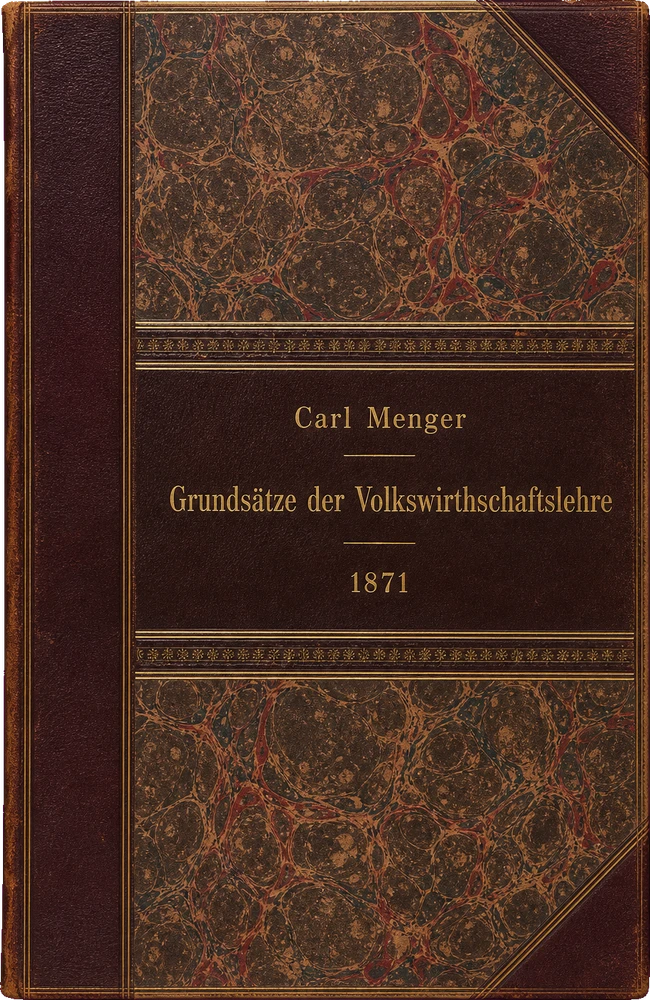
Grundsätze der Volkswirthschaftslehre. Erster, allgemeiner Theil
Carl Menger, 1871
1883

1883 — A quarrel over method names the school

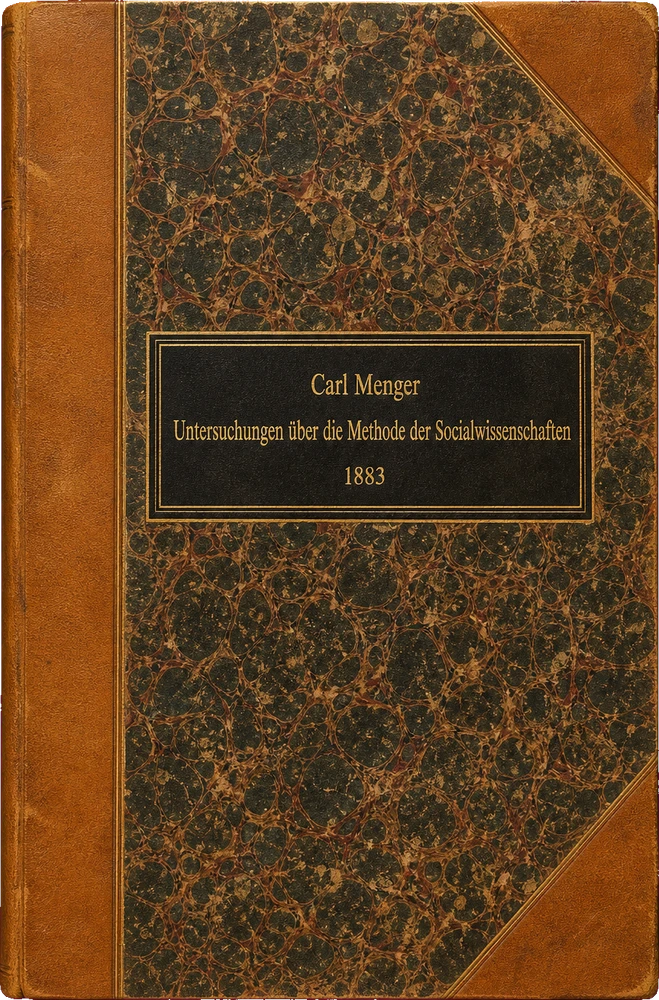
With the Untersuchungen, Menger opens the Methodenstreit against Gustav Schmoller and the German Historical School: can economics state exact laws, or only collect histories? Berlin coins “die österreichische Schule” as a dismissal; Vienna keeps the name and wears it.

Die theoretische Nationalökonomie kann nie als eine historische, oder, wie manche wollen, als eine praktische Wissenschaft aufgefasst werden.

English translation: Theoretical political economy can never be conceived as a historical science, or, as some would have it, as a practical science.

§ 7 Theoretical Knowledge and the Scientific Character of Political EconomyAsk about this passage

Untersuchungen über die Methode der Socialwissenschaften, und der Politischen Oekonomie insbesondere
Carl Menger, 1883
1889

1889 — Interest gets an explanation

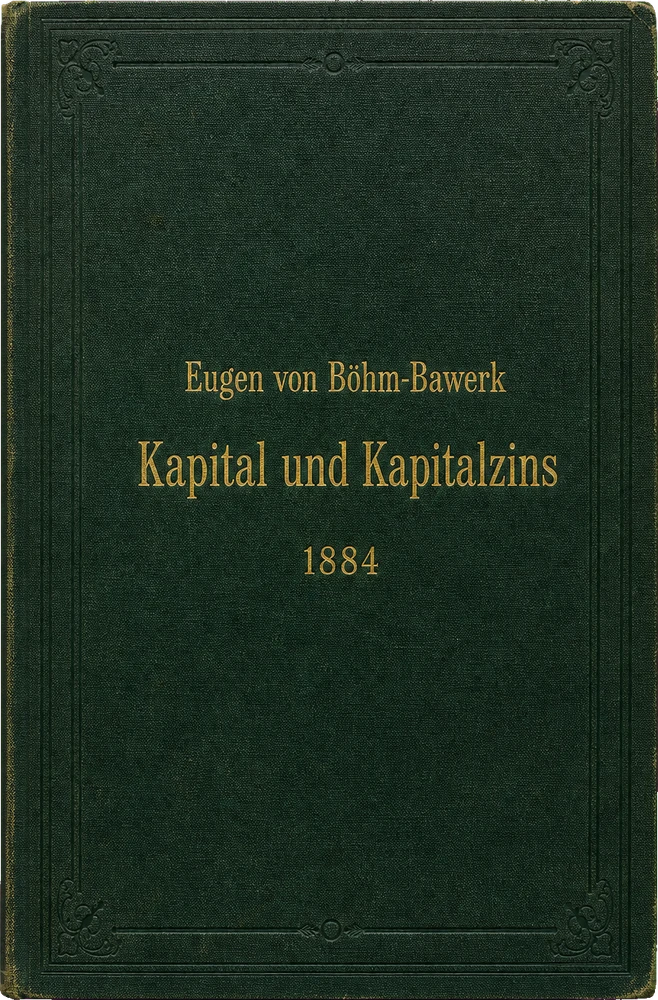
Eugen von Böhm-Bawerk's Positive Theorie des Kapitales roots interest in time itself—present goods outrank future goods—and recasts production as ever longer detours through intermediate goods. In the same year, Wieser's Der natürliche Werth gives the school its idea of cost: the satisfaction forgone elsewhere.

Gegenwärtige Güter sind in aller Regel mehr werth als künftige Güter gleicher Art und Zahl.

English translation: Present goods are, as a rule, worth more than future goods of the same kind and number.

§ 60 Productivity Changes and the Cost Law as a Special Form of Marginal UtilityAsk about this passage

Kapital und Kapitalzins. Zweite Abtheilung: Positive Theorie des Kapitales
Eugen von Böhm-Bawerk, 1889
1896

1896 — The Marx critique

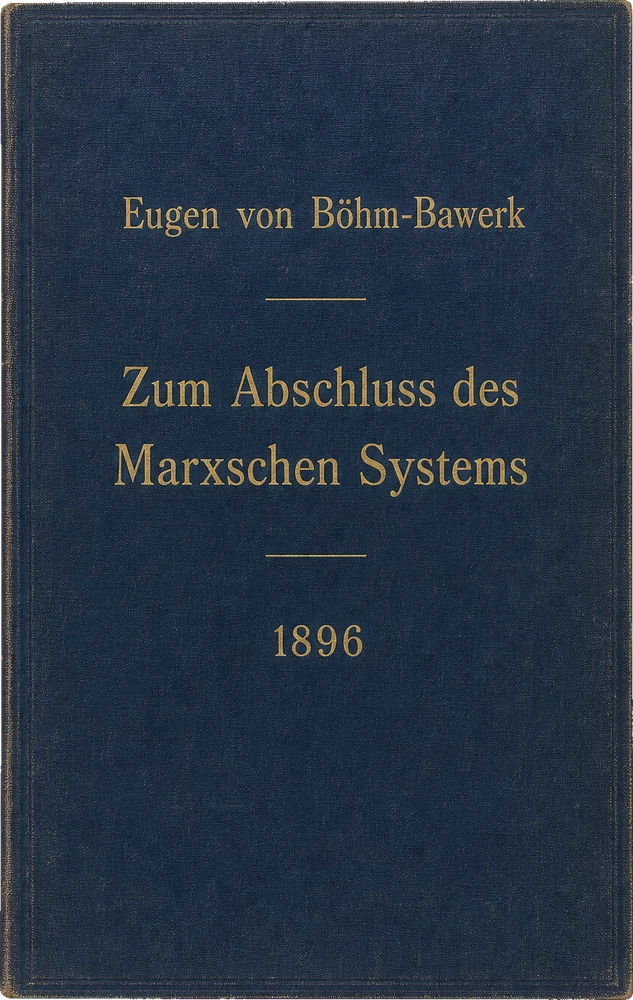
When the third volume of Das Kapital finally appears, Böhm-Bawerk reads it against the first—and writes the classic critique of the labor theory of value. The confrontation between Vienna and Marxism begins here and runs, through the calculation debate, across the whole century.

Das Marxsche System hat eine Vergangenheit und eine Gegenwart, aber keine dauernde Zukunft.

English translation: The Marxian system has a past and a present, but no lasting future.

§ 12 Werner Sombart's Apology and the Future of Marx's SystemAsk about this passage

Zum Abschluß des Marxschen Systems
Eugen von Böhm-Bawerk, 1896
1912

1912 — Money joins the theory of value

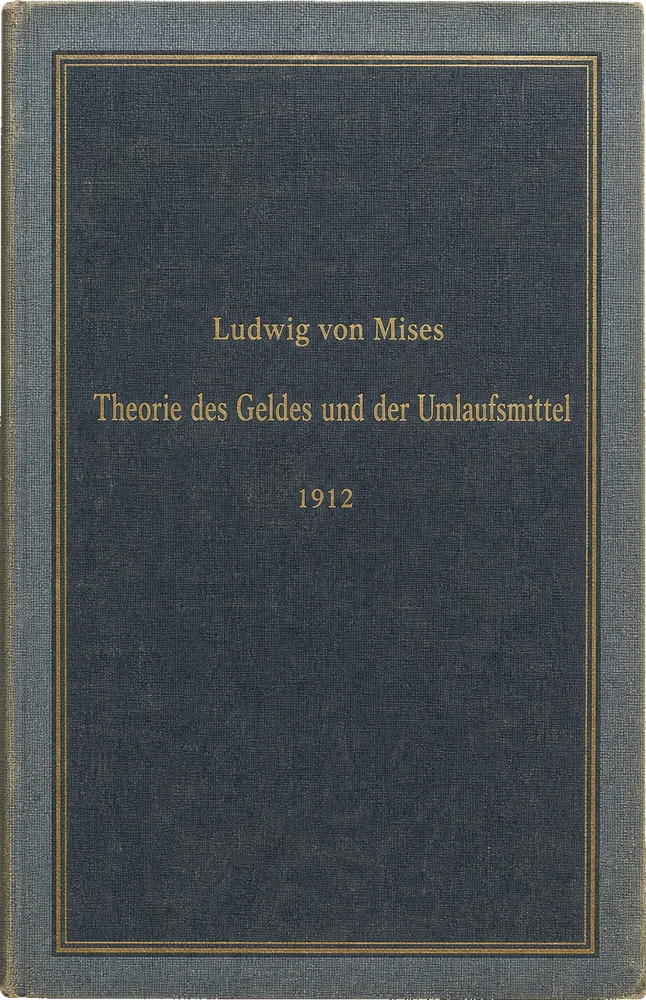
The young Ludwig von Mises does what many held impossible: he brings money itself under the marginal-utility logic. And he warns, two years before the war and a decade before the great inflation, where politically managed interest rates must lead.

Die autonome Zinspolitik muß notwendigerweise zur fortschreitenden Geldentwertung führen.

English translation: An autonomous interest-rate policy must necessarily lead to progressive depreciation of money.

§ 77 Gold Premium Policy of the Bank of FranceAsk about this passage

Theorie des Geldes und der Umlaufsmittel
Ludwig von Mises, 1912

Between the wars 1919–1938

Vienna against the planned economy—and against Cambridge.

1922

1922 — The calculation debate

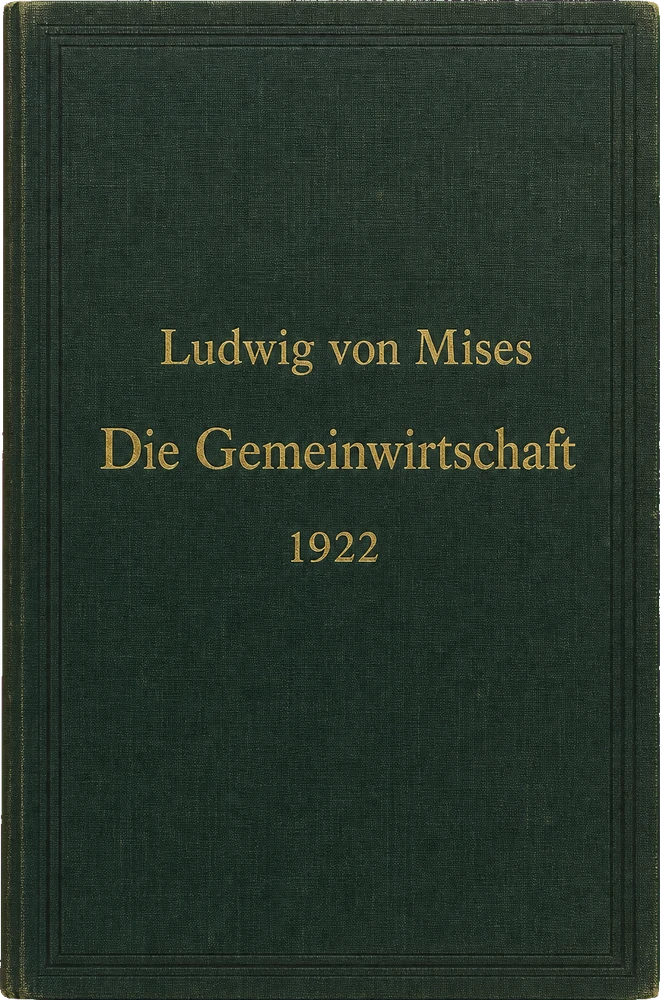
Out of a 1920 essay grows Die Gemeinwirtschaft: without private property in the means of production there are no prices; without prices, no calculation; without calculation, no rational economy. The socialist calculation debate, the school's central argument of the twentieth century, starts on this page.

Ohne Wirtschaftsrechnung keine Wirtschaft.

English translation: Without economic calculation, no economy.

§ 24 Prerequisites of Calculation and the Failure of Natural Calculation in SocialismAsk about this passage

Die Gemeinwirtschaft: Untersuchungen über den Sozialismus
Ludwig von Mises, 1922
1931

1931 — Vienna arrives in London

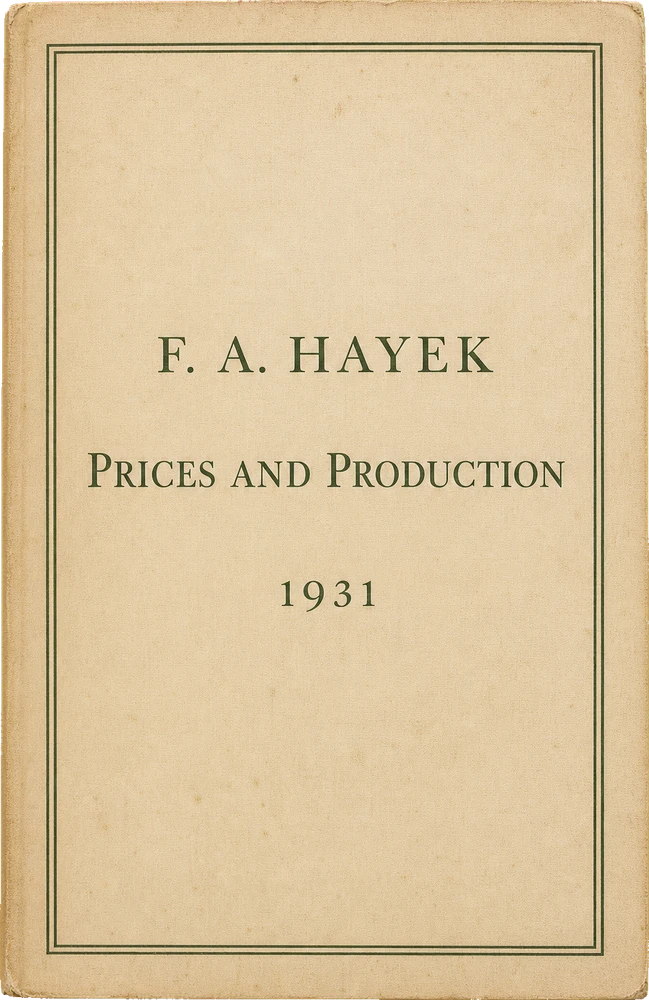
Friedrich Hayek delivers four lectures at the London School of Economics and publishes them as Prices and Production: booms are made in the credit system, and what the boom distorts, the slump must correct. Through the 1930s this is the chief rival to Keynes's answer to the Depression.

It is probably an illusion to suppose that we shall ever be able entirely to eliminate industrial fluctuations by means of monetary policy.

§ 7 The Case For and Against an Elastic CurrencyAsk about this passage

Prices and Production
Friedrich August von Hayek, 1931

Emigration and war 1934–1949

The school loses its city and keeps its argument.

1940

1940 — A system, written in exile

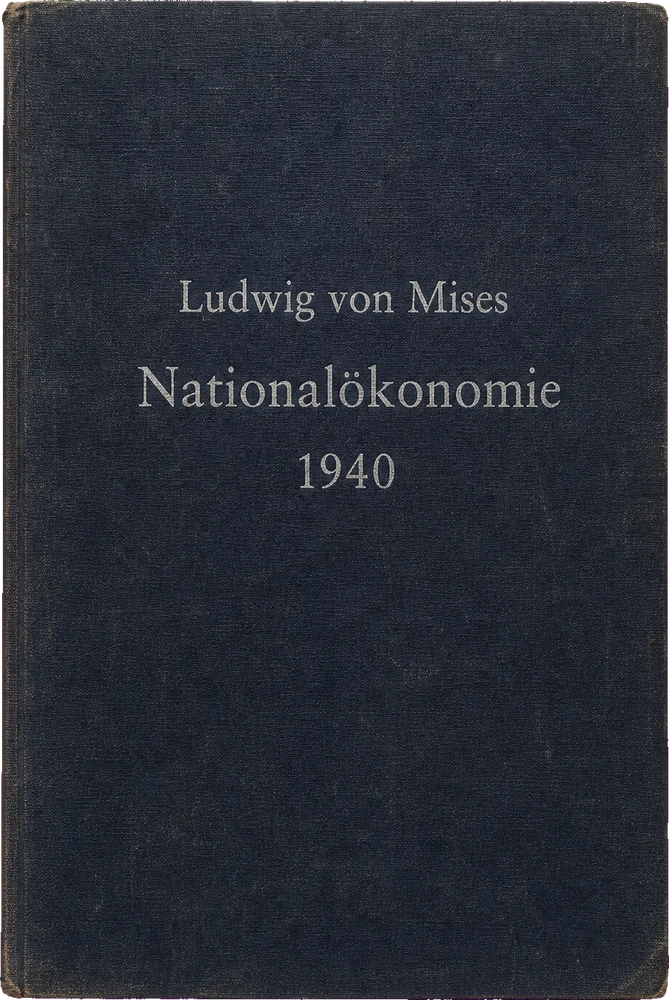
The Vienna seminars scatter to Geneva, London, and New York. From Geneva, Mises publishes Nationalökonomie, the first complete system of the school: economics re-founded as a general theory of human action, in a language and a Europe that were both about to vanish.

Der Markt lenkt, der Markt bringt in das Getriebe Sinn und Ordnung.

English translation: The market directs; the market brings meaning and order into the machinery.

§ 87 Steering Action through the Market: The Nature of the Market EconomyAsk about this passage

Nationalökonomie: Theorie des Handelns und Wirtschaftens
Ludwig von Mises, 1940
1944

1944 — The tradition finds a public

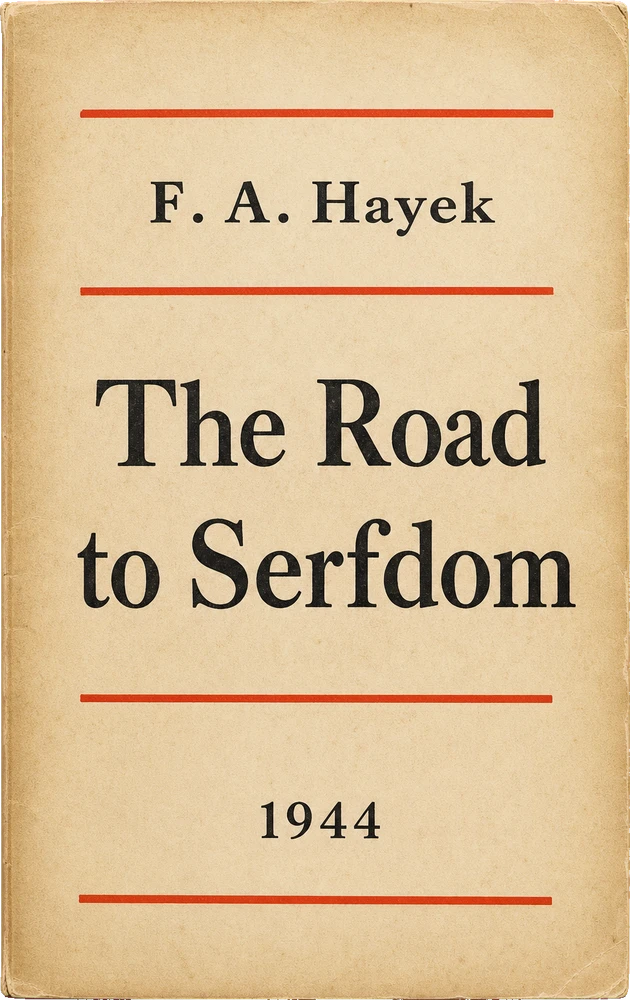
Written in wartime London and dedicated “to the socialists of all parties,” Hayek's The Road to Serfdom becomes an unexpected bestseller in America and carries the Austrian warning about planning far beyond the seminar room. Hayek argues that as the state directs more of economic life, individuals lose room to make plans of their own. The same year, Mises aims the same argument at the total state in Omnipotent Government.

The Road to Serfdom
Friedrich August von Hayek, 1944
1949

1949 — The treatise, in English

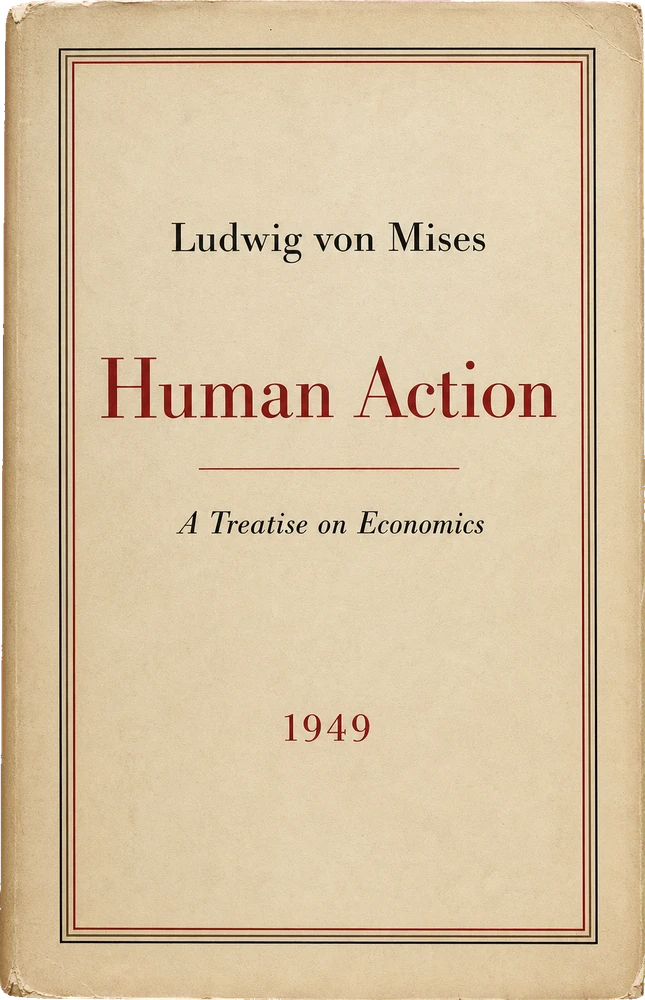
In New York, Mises rewrites his system in his new language. Human Action is the fullest statement of the school ever put between two covers, praxeology from its first sentence to its last, and the book around which the American revival will gather.

Human action is purposeful behavior.

§ 13 Purposeful Action and Animal ReactionAsk about this passage

Human Action: A Treatise on Economics
Ludwig von Mises, 1949

The revival 1950–today

A new generation takes the argument to America.

1960

1960 — Liberty gets its constitution

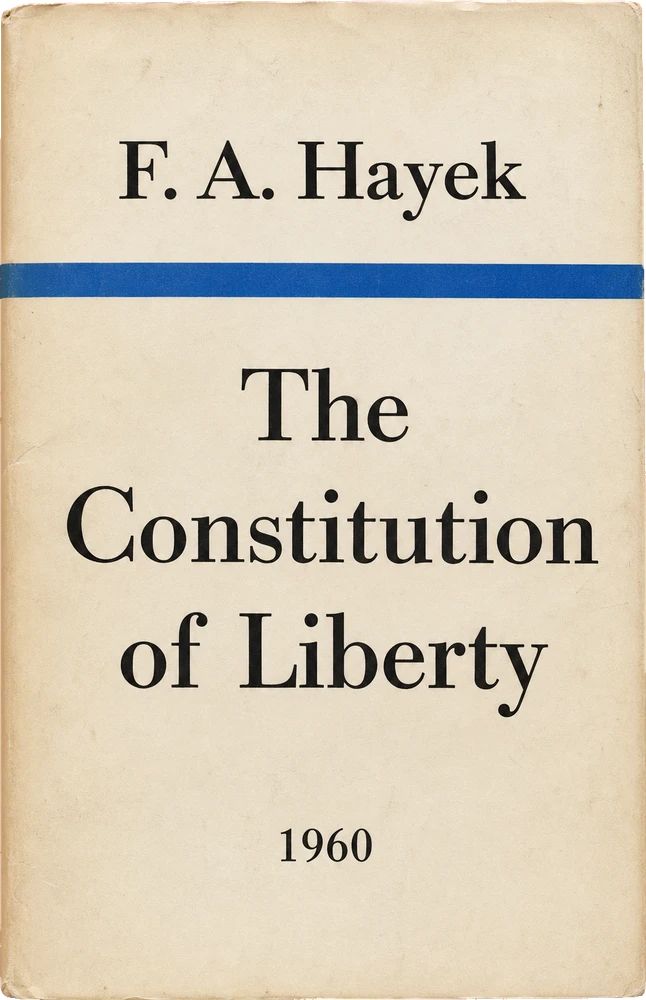
In Chicago, Hayek widens the school's economics into a political philosophy. The Constitution of Liberty makes the case for a society of free people under general rules: the book he would be handing to statesmen for the next thirty years.

Freedom granted only when it is known beforehand that its effects will be beneficial is not freedom.

§ 7 The Creative Powers of a Free CivilizationAsk about this passage

The Constitution of Liberty
Friedrich August von Hayek, 1960
1973

1973 — The entrepreneur returns

Israel Kirzner's Competition and Entrepreneurship puts the alert, acting entrepreneur back at the center of market theory. A year later Hayek receives the Nobel Prize, and a small conference in South Royalton, Vermont gathers the students who will carry the school into its second century. The shelves of the seventies, eighties, and nineties in this collection are their work.

In equilibrium there is no room for the entrepreneur.

§ 15 Equilibrium Economics, Entrepreneurship, and CompetitionAsk about this passage

Competition and Entrepreneurship
Israel M. Kirzner, 1973

The argument continues.

Twelve turning points are the spine of the story, not the whole of it. The collection holds 1,549 works across 150 years: founding texts, debates, later editions, the revival, and the living school. The Librarian reads them all and answers with the passage.

Ask the LibrarianBrowse the archive